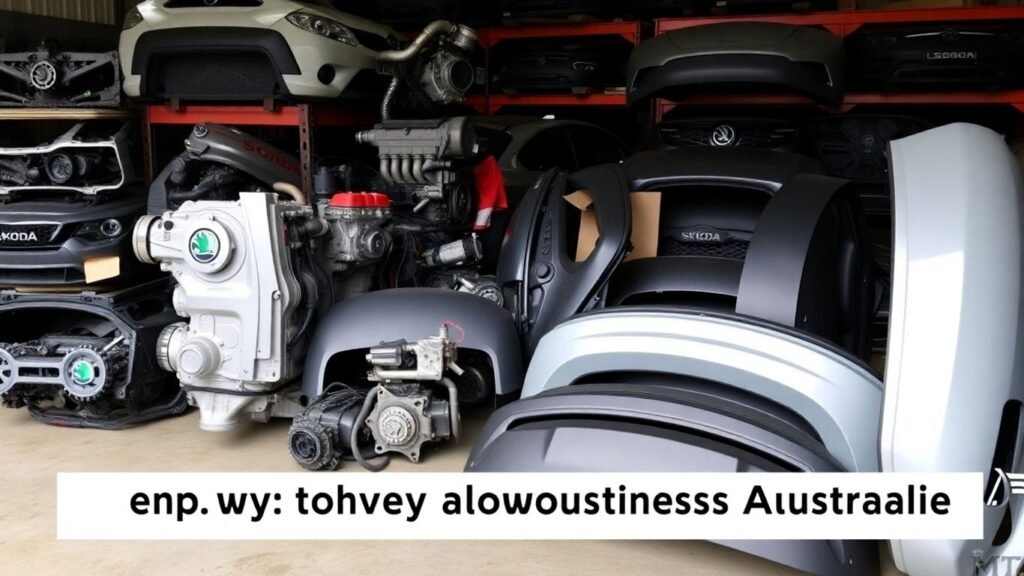
Everything You Need to Know About the Skoda Fabia Engine and Gearbox
Thinking about getting a Skoda Fabia or just curious about what makes it tick? You’ve come to the right place. We’re going to break down the Skoda Fabia engine and gearbox options, looking at how they’ve changed over the years and what you can expect. Whether you’re a seasoned driver or just starting out, understanding your car’s heart and how it connects to the wheels is pretty important. Let’s get into the nitty-gritty of the Skoda Fabia engine and gearbox. Key Takeaways The Skoda Fabia has historically offered a range of petrol engines, from naturally aspirated to turbocharged, and some older models also had diesel options. Transmission choices typically include manual gearboxes, offering a more engaging drive, and automatic options, including the DSG dual-clutch transmission for quicker shifts. Engine technology has evolved, with newer models focusing on efficiency through features like engine stop-start systems and smaller, more potent turbocharged units. Regular maintenance, including checking and changing engine oil and gearbox oil according to recommended intervals, is vital for the longevity of the Skoda Fabia engine and gearbox. The choice of engine and gearbox can significantly impact the Fabia’s performance, fuel economy, and overall driving feel, with different generations offering varying balances of these aspects. Understanding Skoda Fabia Engine Options When you’re looking at a Skoda Fabia, the engine choices are pretty straightforward, especially in recent years. Skoda has really streamlined things, focusing on petrol power. Gone are the days of a wide variety of diesel options; now it’s all about efficient petrol units, some with a turbocharger for a bit more pep, and others naturally aspirated for simplicity. The core of the Fabia’s engine lineup has consistently revolved around small-displacement petrol engines, often from the Volkswagen Group’s stable, designed for economy and everyday usability. This means you’re unlikely to find a hybrid system or a full-blown performance engine in the standard Fabia models. Instead, Skoda aims for a balance that keeps running costs down while still providing enough get-up-and-go for daily driving. Evolution Of Skoda Fabia Petrol Engines Skoda’s petrol engines for the Fabia have seen a clear progression towards smaller capacities and forced induction. Early models might have featured slightly larger, naturally aspirated engines, but the trend has been to downsize. You’ll find a lot of 1.0-litre, three-cylinder engines making their way into the Fabia, often in both naturally aspirated and turbocharged forms. The turbocharged versions, like the TSI units, offer a significant boost in power and torque compared to their non-turbo counterparts, making them feel much livelier. As generations have passed, these engines have become more refined, with better sound deadening and improved efficiency. Diesel Engine Availability In The Fabia While Skoda did offer diesel engines in the Fabia for many years, their presence has significantly diminished, especially in newer generations. If you’re looking at a Fabia from the last few years, you’ll likely find that diesel options have been completely dropped from the lineup. This shift reflects a broader industry trend away from diesel in smaller passenger cars, driven by emissions regulations and changing consumer preferences. For those seeking a diesel Fabia, you’ll need to look at older models, where engines like the 1.9-litre TDI were once common. Turbocharged Versus Naturally Aspirated Engines The difference between turbocharged and naturally aspirated engines in a Fabia is quite noticeable. Naturally aspirated engines, like the basic 1.0-litre MPI, are simpler and often found in lower-powered models. They deliver power in a more linear fashion, but can feel a bit sluggish, especially when you need to overtake or climb a hill. Turbocharged engines, on the other hand, use a turbocharger to force more air into the engine, allowing it to produce more power and torque from the same or even a smaller displacement. This means a turbocharged Fabia, even with a small 1.0-litre engine, can feel surprisingly quick and responsive. The choice between a turbocharged and naturally aspirated engine often comes down to your driving style and priorities. For city driving and occasional longer trips where economy is key, a naturally aspirated engine might suffice. However, if you frequently find yourself needing more power for merging onto highways or carrying passengers, a turbocharged option will likely provide a more satisfying experience. Engine Type Typical Power Output Characteristics Naturally Aspirated 60-80 hp Simpler, linear power delivery, can feel less urgent Turbocharged 95-150 hp More power and torque, responsive, better for overtakes Skoda Fabia Gearbox Choices And Performance When you’re looking at a Skoda Fabia, the gearbox is a pretty big deal. It really changes how the car feels to drive, and Skoda has offered a few different ways to get the power to the wheels over the years. You’ve got your classic manual, which some people swear by, and then there are the automatic options, including the fancy DSG. Manual Transmission Advantages For a lot of drivers, the manual gearbox is still the way to go. It gives you a direct connection to the engine, letting you decide exactly when to shift gears. This can make the car feel more engaging and, honestly, sometimes more fuel-efficient if you’re good at it. The lower-powered engines, especially the 1.0-litre naturally aspirated ones, often come with a five-speed manual. It’s a simple setup that works well, especially if you’re not in a huge rush. Automatic Gearbox Performance Skoda has fitted automatic gearboxes to various Fabia models, and they’ve evolved over time. Early automatics could sometimes feel a bit sluggish, taking their time to downshift when you needed a bit more power. This was particularly noticeable on some of the 116hp models with a seven-speed automatic. While it was fine for relaxed driving, asking for quick acceleration could lead to a bit of a wait. The automatic gearbox can be convenient, especially in stop-and-go traffic, but it’s worth test-driving to see if its performance matches your driving style. Sometimes, the manual feels more responsive, even with less horsepower. Understanding DSG Transmission The DSG, or Direct-Shift Gearbox, is Skoda’s take on a dual-clutch automatic. These are