Key Takeaways
Choosing a used Skoda part is easier when you verify compatibility, condition, price, and seller support before committing.
- Match the replacement part to the exact Skoda model, year, engine, trim, and side position.
- Use the VIN and part number to reduce compatibility mistakes.
- Ask about testing, mileage, wear, warranty coverage, and returns.
- Compare the complete cost, including delivery, fitting, and installation.
- Choose a wrecker that communicates clearly and supports safe, responsible installation.
Understanding how Skoda wreckers Castle Hill can help
A vehicle wrecker can be a practical source for replacement components when a repair does not justify buying a new part. The right supplier may help you locate body panels, interior pieces, mechanical components, or electrical items from dismantled vehicles. For local drivers, Skoda wreckers Castle Hill can also make collection, inspection, and delivery more convenient. The useful starting point is understanding what is available and where recycled parts fit into a sensible repair decision.
What Skoda wreckers typically offer
Wreckers usually dismantle end-of-life or damaged vehicles and recover parts that remain suitable for reuse. Depending on the vehicle and its condition, stock may include engines, transmissions, suspension components, lights, doors, mirrors, seats, dashboards, and trim. Availability changes constantly, so a phone call with the vehicle details is often more productive than relying on a broad online listing.
A good supplier should be able to describe whether a component has been removed, inspected, tested, or stored. That information gives you a clearer basis for deciding whether the part suits a routine repair or needs additional checks before installation.
Common reasons to buy recycled Skoda parts
Recycled parts are often considered when a genuine replacement is expensive, difficult to source, or disproportionate to the value of an older vehicle. They can also help preserve the factory fit and appearance of components that are difficult to match with generic alternatives. For cosmetic repairs, a used door, mirror, or interior trim piece may be especially practical when the colour and specification are close.
The best choice depends on the part. A used bracket or body panel may be straightforward, while a high-wear mechanical component deserves more detailed questions about testing and service history. Treat the purchase as a condition-and-compatibility decision rather than simply the cheapest available option.
Models and components commonly available
Stock depends on which Skoda vehicles have recently arrived for dismantling, so no particular model or component should be assumed to be available. Ask the seller to search by model, build year, engine, body style, and trim. Those details can distinguish parts that look similar but use different connectors, mounting points, or finishes.
It also helps to describe the failed component precisely. “Front bumper” may not be enough if the vehicle has parking sensors, headlamp washers, a sports trim, or a different grille arrangement. A photograph of the vehicle and the damaged area can make the initial search more accurate.
Used parts versus new aftermarket alternatives
A used original component may offer a closer match than a new aftermarket part, particularly for panels, fittings, and interior details. An aftermarket option may be attractive when a part is readily available and supported by a clear warranty. Price, expected service life, fit, and the consequences of a poor match all deserve consideration.
Compare like with like before deciding. A low purchase price can lose its appeal if the part needs modification, arrives with missing hardware, or requires repeated removal and refitting. Conversely, a clean recycled part with known provenance may provide good value for an older Skoda.
Identifying the right replacement part
Correct identification is the foundation of a successful used-parts purchase. Two components can appear identical while differing by engine, production period, drivetrain, software, trim, or market specification. Gather the vehicle details before contacting a seller, and keep photographs of the original part available. This simple preparation reduces back-and-forth and helps prevent an expensive return.
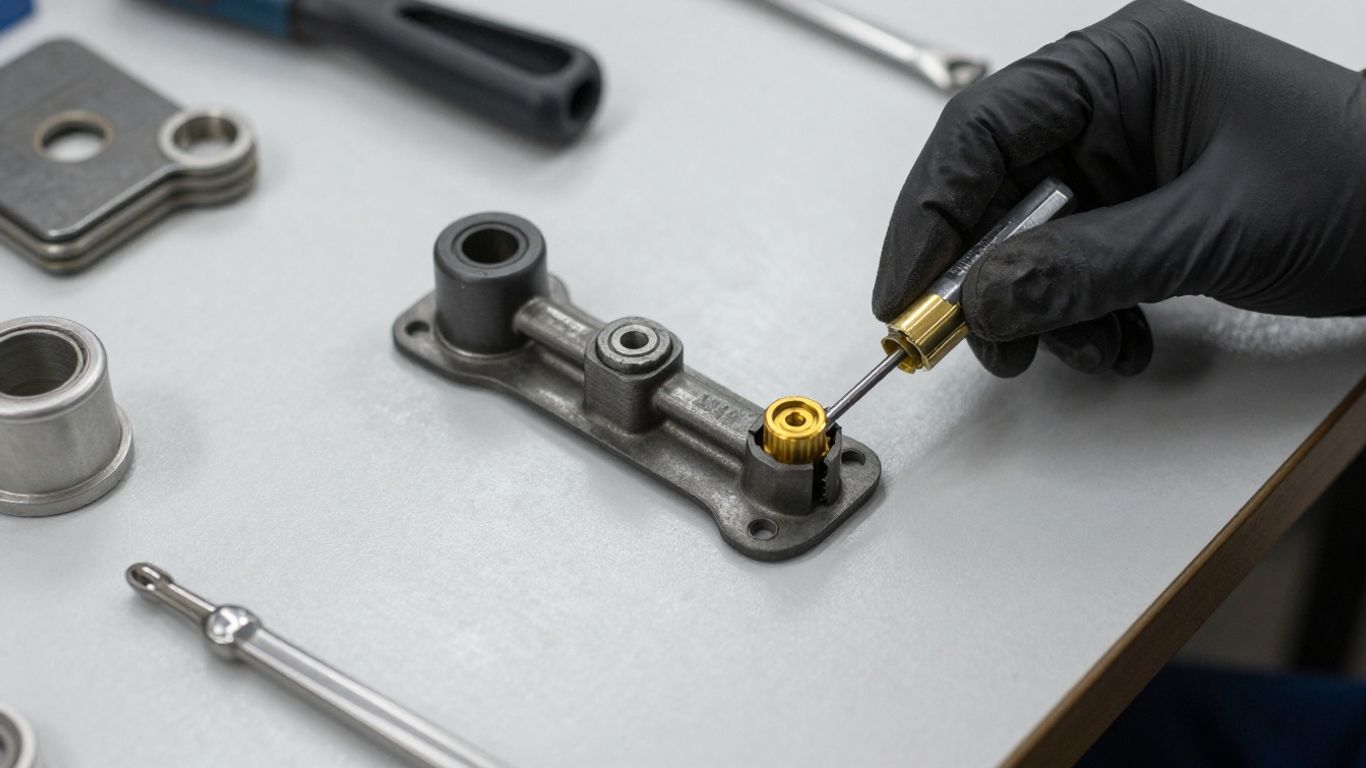
The image of the original label, connector, or mounting arrangement can be as useful as a verbal description. Once the basic match is established, confirm the finer differences before arranging payment or transport.
Matching parts to your Skoda model and year
Start with the exact model designation and build year, then add the body style and trim if you know them. Facelifts and mid-year production changes can affect lights, bumpers, grilles, dashboards, and electronic modules. Registration details may help identify the vehicle, but the build information on the vehicle itself is often more precise.
Do not rely on a listing that says a part fits “many models” without asking for a specific confirmation. Provide the seller with the complete vehicle description and, when possible, a clear photograph of the old part beside its identifying label.
Checking engine, transmission, and trim compatibility
Mechanical and electronic compatibility often depends on more than the model name. Engine size, fuel type, transmission, drivetrain, and emissions equipment may change the correct component. Trim level can also affect seats, steering wheels, exterior fittings, sensors, and infotainment equipment.
Ask whether the replacement came from a vehicle with the same major specification. If it did not, request confirmation of the relevant connectors, brackets, software requirements, and mounting points. A confident answer should be based on identifiable details, not only on visual similarity.
Using VIN and part numbers for accuracy
The VIN gives a seller a reliable reference for the vehicle being repaired, while the part number identifies the component itself. Supply both whenever possible, along with the number printed or stamped on the original part. Suffixes and revision codes can matter, so they should not be omitted from a quotation request.
A part number is not always a guarantee that installation will be simple. Some modules may require coding, calibration, or compatible surrounding hardware. Confirm those requirements before buying so the apparent saving is not reduced by unexpected workshop work.
Recognizing left-hand and right-hand part differences
Side-specific parts are a common source of avoidable errors. Mirrors, headlights, tail lights, suspension components, steering-related items, and some interior pieces may be different on the left and right sides. Listings may use the seller’s perspective, the driver’s perspective, or vehicle-direction terminology, so clarify the side explicitly.
Use a photograph that shows the part installed on the donor vehicle and ask for the side designation in writing. Check connector position and mounting points as well, since a side difference can be hidden until installation begins.
Evaluating part quality and condition
A suitable part should be assessed for both identity and condition. Recycled components have lived previous service lives, and wear may vary even between parts from the same model. Ask what the supplier has checked and what remains unverified. Condition should be documented clearly rather than left to assumption.
The answer may be a straightforward “tested and ready to fit,” or it may reveal that the part is sold for inspection, repair, or dismantling only. Those are very different purchases, and the price should reflect that difference.
Graded, tested, and inspected components
Ask how the seller grades parts and what each grade means in practical terms. A tested electrical component should have a stated test basis, while a body panel should be described in terms of dents, scratches, corrosion, colour, and included fittings. Mechanical parts may need information about operation, leaks, compression, or visible damage.
Written descriptions and photographs are useful because they create a shared understanding before the sale. If the condition is unclear, request additional images of connectors, seals, mounting tabs, and worn surfaces instead of accepting a vague assurance.
Questions to ask about mileage and wear
For engines, transmissions, steering parts, and other wear-sensitive components, ask about the donor vehicle’s mileage and the source of that information. Also ask whether the vehicle was running before dismantling and whether the component was removed because of accident damage or mechanical failure. Mileage alone does not establish condition, but it provides helpful context.
For interior and exterior parts, ask about sun fading, stains, cracks, corrosion, and previous repairs. Small defects may be acceptable when they are disclosed, while hidden damage can create extra labour and refinishing costs.
Signs a used Skoda part may need reconditioning
Some components can be reused immediately, while others may be economical only after cleaning, rebuilding, painting, or testing. Surface corrosion, brittle seals, worn bushes, damaged clips, faded plastics, and cracked housings are signs that further work may be needed. Electronic parts may also require diagnosis or programming after installation.
Ask for an honest estimate of the work required before agreeing to the purchase. If reconditioning is necessary, include that cost in the comparison rather than treating the used part as ready to install.
Understanding warranties and return policies
Warranty terms should state what is covered, how long coverage lasts, and what exclusions apply. Clarify whether labour, diagnosis, freight, fluids, seals, and consequential damage are excluded. A return policy should also explain the time limit, condition requirements, and process for reporting a problem.
Keep the invoice, messages, photographs, and part number confirmation. These records make it easier to resolve a genuine mismatch or fault and help establish what was agreed at the time of sale.
Comparing prices and total value
A useful quote includes more than the price printed beside a component. Ask whether the part is complete, tested, and supplied with the hardware needed for installation. Then compare that figure with the likely cost of delivery, fitting, programming, refinishing, or returning an incorrect item. This broader view reveals the real value of the purchase.
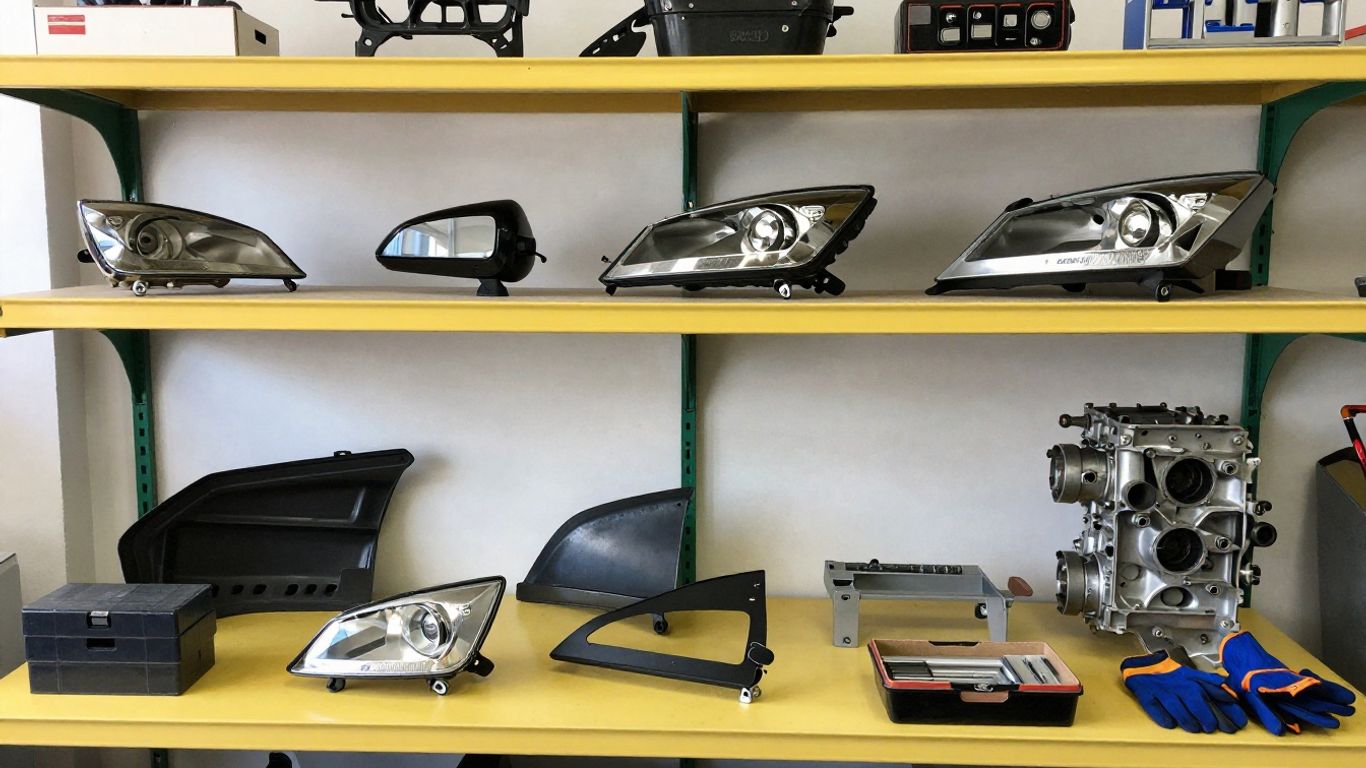
A clean, organised workshop scene can make the comparison feel straightforward, but the practical details matter more than appearance. Request the same information from each seller so that one low headline price is not being compared with another supplier’s fully prepared quote.
How to request an accurate quote
Give the seller the VIN, model, year, engine, transmission, body style, part name, part number, side, and any relevant options. Explain whether you need a complete assembly or only a subcomponent. Include your suburb or delivery location and ask whether freight, taxes, and collection fees are included.
A clear request reduces the chance of receiving a quote for a visually similar but incompatible item. It also gives the seller enough context to mention testing, condition, warranty, and availability in the first response.
Comparing genuine, aftermarket, and recycled parts
Genuine, aftermarket, and recycled parts each involve different trade-offs. A genuine part may offer a direct specification match, an aftermarket part may be easier to obtain, and a recycled part may retain original fit at a lower purchase price. The sensible choice changes according to the component and the vehicle’s age.
Compare warranty terms, expected durability, installation requirements, and return arrangements alongside the price. For a safety-related or highly integrated component, the cheapest option may not be the best value if its history or compatibility cannot be established.
Factoring in delivery, fitting, and installation costs
Large panels, glass, engines, and transmissions can carry meaningful freight charges and require careful packaging. Some parts need specialist fitting, wheel alignment, coding, calibration, painting, or replacement seals. Add those expenses before deciding whether a used component is genuinely economical.
Ask the mechanic for an estimate based on the specific part, not a general labour assumption. If the installation involves opening a system or removing several adjacent components, a small saving on the purchase price may not offset the cost of doing the work twice.
Avoiding unusually cheap or unclear listings
An unusually low price can reflect missing hardware, unknown condition, damage, limited warranty, or a part that is intended only for dismantling. It may still be worth considering, but only when the limitations are stated and accepted. Be cautious when a listing omits the part number, donor details, photographs, or a clear description.
A fair comparison begins with complete information, not the lowest number.
Use that principle when reviewing several quotes. If one supplier cannot explain what is included, how the part was checked, or what happens if it does not fit, the lower price may carry more risk than value.
Choosing a reliable local wrecker
A reliable wrecker is not defined only by the size of its advertised inventory. Communication, record keeping, condition descriptions, and after-sale support all affect the outcome. Local access can be helpful, but it should not replace basic checks about the business and the part. Take a few minutes to establish who you are buying from and how issues are handled.
Checking licensing, reviews, and industry experience
Look for evidence that the business operates lawfully and has experience handling the type of vehicle and component you need. Reviews can reveal patterns in communication, packaging, accuracy, and returns, although a single review should not decide the purchase. Ask direct questions and notice whether the answers are specific or evasive.
Experience is particularly valuable when a part has multiple revisions or needs a compatibility check. A seller who records donor details and part numbers is more likely to provide useful information than one relying on a generic description.
Assessing inventory and sourcing capabilities
Ask whether the component is physically in stock, already removed, and ready for inspection. If it is not available, find out whether the business can search recent dismantling stock or source the item through its normal network. Do not treat a promised search as confirmation that the part has been found.
A clear inventory process also helps with condition and dispatch times. The seller should be able to say whether the item shown is the exact part being sold and whether the photographs reflect its current state.
Confirming pickup, delivery, and dismantling services
Confirm collection hours, loading arrangements, freight options, packaging, and expected dispatch timing. Heavy or fragile components may need special handling, while painted panels and glass require protection from impact. If you are arranging a courier, check dimensions and weight before booking.
If the vehicle itself is being dismantled, ask how parts are removed and whether associated brackets, sensors, keys, or wiring are retained. Missing small items can delay installation even when the main component is correct.
Evaluating customer support and technical guidance
Useful support does not mean a seller can replace a qualified mechanic’s diagnosis. It means the business can answer practical questions about the donor vehicle, part number, condition, included hardware, and return process. Clear technical guidance is especially helpful when several versions of a component exist.
Provide precise information in return and keep the conversation focused on the part you need. A cooperative exchange before purchase is a reasonable indicator of how efficiently a mismatch or damage claim may be handled later.
Buying and installing used Skoda parts safely
Safe purchasing continues after the quote is accepted. Check the component before payment where possible, transport it appropriately, and plan installation around the part’s technical requirements. Some repairs are simple, while others involve fluids, electrical systems, lifting equipment, or calibration. When the risk is unclear, involve a qualified professional rather than improvising.
Verifying the part before payment
Compare the supplied item with the agreed description, photographs, part number, side, connectors, mounting points, and visible condition. Look for cracks, bent brackets, missing clips, corrosion, fluid leaks, and signs of impact. If the part is packaged for delivery, photograph the packaging before opening it and document any damage immediately.
Do not remove identifying labels or discard protective materials until the fit has been confirmed. Those details may be needed if the item is incorrect or arrives damaged.
Transporting fragile and heavy components
Use suitable wrapping, bracing, and lifting equipment for the component. Glass, lights, painted panels, and electronic modules need protection from impact, moisture, and static or connector damage. Engines and transmissions should be secured upright or in the position recommended by the carrier, with fluids handled safely.
Do not place heavy components on delicate trim or wiring. If collection is involved, plan the vehicle space, tie-down points, and assistance needed before arriving so the part can be moved without injury or damage.
Working with a qualified mechanic
A qualified mechanic can verify the diagnosis, inspect the replacement, and identify related faults before installation. They may also need to perform coding, calibration, bleeding, alignment, fluid replacement, or post-installation testing. These steps are part of the repair cost and should be discussed before the part is ordered.
Share the seller’s description and warranty conditions with the workshop. The mechanic can then record any pre-existing damage and advise whether the component is suitable before it is fitted permanently.
Disposing of removed parts responsibly
Removed components should not simply be placed in general waste. Oils, coolant, batteries, tyres, refrigerants, electronic modules, and contaminated materials need appropriate handling. A workshop or licensed recycling facility can advise on the correct path for each material.
Retain the old part until the replacement has been tested and any return period has passed. After that, responsible recycling reduces hazards and keeps recoverable materials out of landfill.
Conclusion
The right used Skoda part is the result of careful matching, honest condition checks, complete cost comparisons, and safe installation planning. Gather the VIN and part number, ask detailed questions, document what is agreed, and choose a local wrecker that communicates clearly. That measured approach gives you a better chance of securing a sound replacement without turning a repair into a second problem.