Key Takeaways
Buying used Skoda parts can reduce repair costs, but the right match matters more than the lowest quoted price.
- Confirm the model, generation, VIN, engine code, and part number before ordering.
- Ask how a used part was inspected, tested, stored, and removed.
- Compare genuine, reconditioned, and aftermarket options on total installed cost.
- Check warranty, returns, freight, pickup, and fitting arrangements in writing.
- Remove personal items and prepare ownership documents before recycling an unwanted vehicle.
Understanding Skoda wreckers in Campbelltown
Skoda wreckers provide a practical route to replacement components when a new part is too expensive or no longer readily available. Their stock may come from vehicles that are damaged, uneconomical to repair, old, or being retired for other reasons. A careful buyer treats the wrecker as a parts specialist, not simply as a source of cheap items.
What Skoda wreckers offer
A dismantler may have everything from a door mirror or interior switch to a complete engine assembly, depending on recent vehicle arrivals. Availability changes constantly, so it helps to describe the exact component rather than asking only for parts for a particular model. The same vehicle can also supply several related items, which may make one collection more economical than separate orders.
Used stock is usually most useful when the original part is no longer covered by warranty, when cosmetic wear is acceptable, or when a vehicle needs to return to the road without a major outlay. Ask whether the quoted item is complete and whether brackets, wiring, sensors, keys, or mounting hardware are included. Those small details can change the final price.
How dismantlers source and inspect vehicles
Vehicles reach dismantlers through accident write-offs, mechanical failures, trade-ins, insurance channels, and owners who no longer want to repair them. Before removal, staff generally identify parts with possible resale value and assess visible damage, wear, and completeness. The quality of that process varies, so a buyer should ask what was checked rather than assuming every used component has received the same inspection.
For mechanical and electrical parts, useful questions include whether the vehicle was running before dismantling, whether the item was tested, and how its mileage was recorded. Photographs can reveal corrosion, broken clips, fluid leaks, or missing covers, but they do not replace a compatibility check. Condition needs context, including the donor vehicle’s age, damage, and service history when those details are available.
Used, reconditioned, and aftermarket parts compared
Used parts are removed from another vehicle and sold in their existing condition, aside from cleaning or basic preparation. Reconditioned parts have been inspected and repaired or refurbished to a stated standard, while aftermarket parts are produced by a manufacturer other than the vehicle’s original supplier. These categories are not interchangeable, and their warranties and expected service lives can differ.
A used component may be the sensible choice for a non-safety-critical repair or an older vehicle. Reconditioning can make more sense for a high-value assembly where internal wear matters. An aftermarket option may suit a common replacement item, but the buyer should still verify its specification, mounting points, electrical connections, and certification where relevant.
When recycled parts are the right choice
Recycled parts are often a good fit for body repairs, trim replacement, mirrors, lights, wheels, and selected mechanical assemblies. They can preserve the correct factory appearance and may be less costly than replacing several related components with new items. They are particularly attractive when a vehicle has cosmetic damage but the surrounding original parts remain sound.
They are less suitable when the part is heavily worn, damaged in the same incident as the rest of the vehicle, or difficult to install twice. Braking, steering, restraint, and other safety-related components deserve especially careful assessment by a qualified technician. The cheapest purchase is not necessarily the cheapest repair if installation fails or another worn component causes a repeat visit.
Finding the right Skoda part
Correct identification is the foundation of a successful used-parts purchase. Model names can cover several generations, body styles, engines, and equipment levels, and a part that looks identical may have a different connector or mounting arrangement. The phrase Skoda parts & wreckers Campbelltown describes a search area, not a guarantee that every listed part will fit every Skoda.
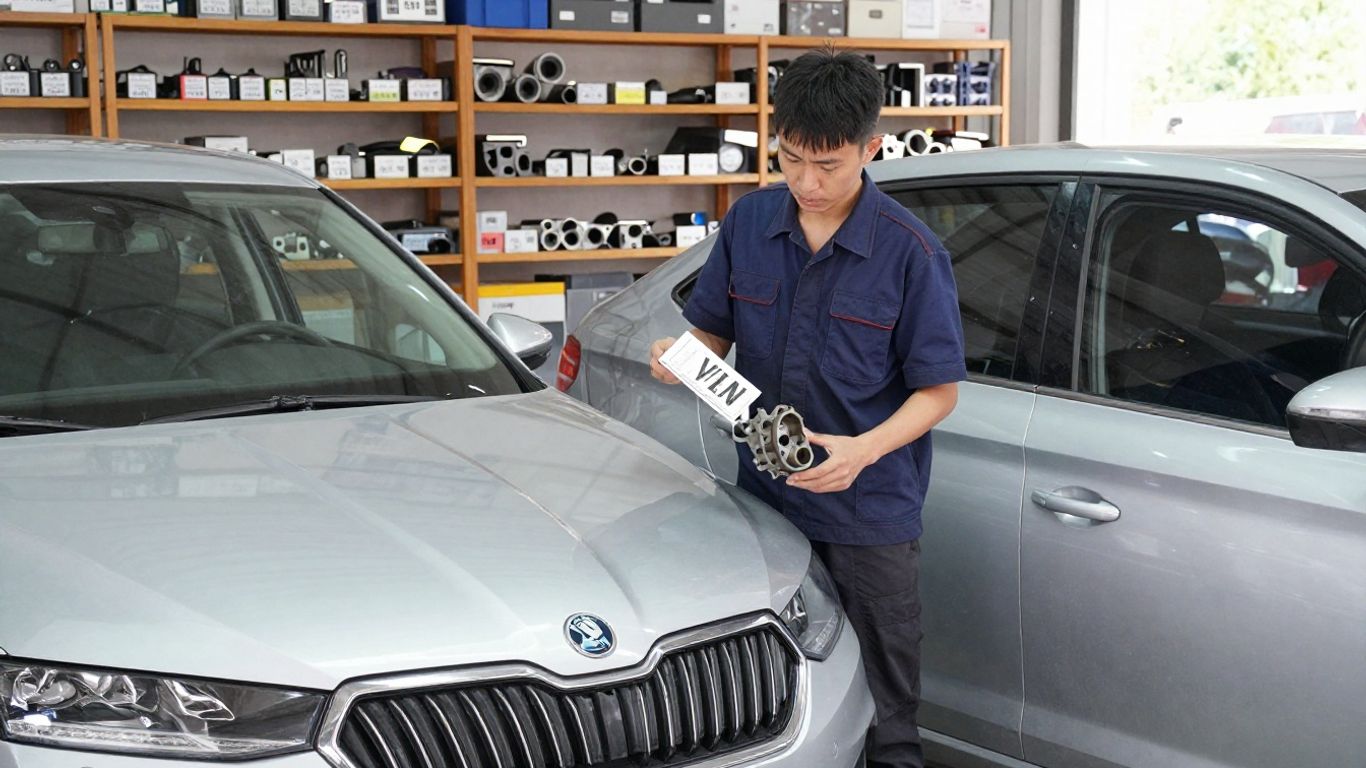
Identifying your Skoda model and generation
Start with the model name, body style, build year, and registration details, then check the vehicle’s exact generation. A hatchback, wagon, sedan, and SUV can share a badge while using different panels, lights, suspension components, or interior fittings. Facelifts can also alter bumpers, grilles, lamps, and electronic modules within what appears to be the same model run.
Take clear photographs of the existing part and its mounting points. Include the vehicle identification label if possible, but cover personal information when sending images publicly. A dismantler can search more accurately when the request includes left or right side, front or rear position, manual or automatic transmission, and any visible sensor or connector details.
Using VINs, part numbers, and engine codes
The VIN is the strongest starting point because it identifies the individual vehicle and helps distinguish production specifications. A stamped or printed part number is also valuable, particularly for electronic modules and engine components. Engine codes, transmission codes, and build dates can resolve differences that a model badge alone cannot.
Read numbers carefully because a single character can point to another revision. Send photographs of labels rather than relying on memory, and ask the supplier to confirm the number they are matching. If a replacement has a superseded number, request an explanation of the relationship and whether programming, adapters, or additional hardware will be required.
Matching parts across different model years
Parts from nearby model years sometimes interchange, but similarity is not proof. Manufacturers can change a connector, software version, trim colour, bracket, sensor position, or safety specification during a running production cycle. Even a panel may require matching clips or a different adjacent piece after a facelift.
When considering an older or newer donor part, compare dimensions, attachment points, finish, electrical plugs, and the catalogue number. Ask for the donor vehicle’s build month and equipment level if the difference is unclear. A short conversation before payment is usually easier than arranging a return after the part has been painted or installed.
Confirming compatibility before purchase
Before placing an order, provide the supplier with the VIN, part number, vehicle details, and photographs. Ask them to record the compatibility basis on the invoice or message thread. This gives both sides a clearer reference if the item arrives and does not match the original.
For electronic parts, confirm whether coding, pairing, or calibration is needed after installation. For body parts, check colour code and whether the component includes grilles, badges, lamps, sensors, or brackets. A written confirmation is especially useful when freight is involved because returning a bulky or fragile item can be expensive.
Popular Skoda parts available from wreckers
The most useful stock depends on which vehicles have recently arrived, but dismantlers commonly handle parts from the drivetrain, electrical system, body, cabin, and running gear. Some items are relatively simple to identify, while others require the vehicle’s precise specification. Good enquiries describe the problem as well as the desired part, since a technician may recommend replacing an associated component at the same time.
Engine and transmission components
Potential stock includes engines, gearboxes, intake components, cooling parts, exhaust sections, starter motors, alternators, driveshafts, and ancillary brackets. The condition of these parts depends heavily on mileage, maintenance, accident history, and whether the donor vehicle was operating when recovered. Ask for compression or operational information where available, along with included accessories and a clear description of exclusions.
A replacement assembly may appear affordable until seals, fluids, mounts, programming, or labour are added. Compare the supplied assembly with your original before removing the old unit. If the vehicle has a known engine or transmission variant, use its code rather than relying on a broad description such as “same model.”
Electrical and electronic parts
Dismantlers may carry batteries, alternators, starter motors, window regulators, switches, instrument clusters, control modules, wiring looms, sensors, and lighting components. Electronic parts deserve extra care because two units can share a housing while using different software or vehicle networks. Ask whether the item was tested and whether it must be reset, coded, or paired after installation.
Inspect plugs for bent pins, moisture, corrosion, and broken locking tabs. A seller’s photograph should show the label and connector side, not only the front of the casing. Keep the original module until the replacement has been confirmed, since it may contain useful identification information or components needed for a return assessment.
Body panels, lights, and interior trim
Doors, guards, bonnets, grilles, mirrors, bumpers, tailgates, headlights, tail lights, seats, consoles, door cards, and trim pieces are common targets for used-parts searches. Original panels can be appealing because their contours and mounting points already match the vehicle. However, colour variation, dents, scratches, broken tabs, and missing hardware should be identified before purchase.
Ask for photographs in natural light and confirm whether the quoted item is bare or complete. A door may be sold without glass, a mirror without its motor, or a bumper without sensors and reinforcement pieces. Interior parts also vary by fabric, trim code, heating, airbags, and right- or left-hand configuration.
Suspension, braking, and steering parts
Possible items include struts, springs, hubs, steering racks, control arms, brake calipers, wheels, and related hardware. These parts experience wear, so mileage and inspection details matter more than appearance alone. Components involved in steering, braking, or suspension should be assessed by a qualified mechanic before they go onto the vehicle.
Ask whether a part has been bent or exposed to impact, particularly when it came from a crashed donor. Check for seized adjusters, damaged threads, corrosion, leaks, and uneven wear. New wear items such as pads, bushes, seals, or bearings may still be appropriate even when a used assembly is serviceable.
Comparing local suppliers and prices
A useful comparison goes beyond the headline price. Two suppliers may be offering parts with different mileage, completeness, testing, warranty periods, and freight terms. Set out the total cost and the risk of a mismatch before deciding, especially for parts that are difficult to install.
Evaluating part condition and mileage
Ask for the donor vehicle’s mileage, damage location, storage conditions, and removal date where those details are available. For bodywork, condition can be judged through close photographs and a description of dents, paint wear, and missing fittings. For mechanical parts, mileage is only one clue; maintenance history and testing may be more revealing.
A simple comparison table can prevent a low quote from looking better than it really is. Record what is included, what has been tested, and what remains uncertain.
| Comparison point | Supplier A | Supplier B |
|---|---|---|
| Donor mileage and history | Confirmed or unknown | Confirmed or unknown |
| Testing and condition | State the test performed | State the test performed |
| Included hardware | List included items | List included items |
| Warranty and returns | Terms and time limit | Terms and time limit |
After filling in the gaps, compare like with like rather than choosing the smallest number. If one quote includes a tested assembly and the other covers an untested bare component, the difference may be reasonable.
Comparing genuine and aftermarket alternatives
A genuine used part may offer the original fit and finish, while a new aftermarket part may provide predictable availability and a fresh service life. Neither category is automatically better for every repair. Check the manufacturer, specification, certification, warranty, and installation requirements for the actual component.
For visible trim, colour and texture may favour a genuine used item. For routine service components, a reputable aftermarket product may be easier to source new. The decision should account for labour and the cost of correcting a poor fit, not just the purchase price.
Checking warranties and return policies
Before paying, ask how long the warranty lasts, what it covers, and what evidence is required if the part fails. Some warranties cover the part only and exclude labour, fluids, diagnostics, or consequential damage. Return conditions may also depend on the item remaining unmodified and being returned within a set period.
Get the terms in writing, including who pays return freight and whether electrical parts have special exclusions. Keep the invoice, photographs, packaging, and installation records. These details make a genuine warranty conversation much simpler if a problem appears.
Factoring in delivery, pickup, and installation costs
A heavy engine, gearbox, door, or bumper can change the economics of a purchase once freight, insurance, loading, and handling are included. Pickup may be cheaper, but only if the item can be transported safely and the yard has a suitable collection process. Fragile lights and electronic modules need protective packaging rather than an improvised box.
Installation is another major part of the budget. Ask a mechanic for a labour estimate before ordering, and include fluids, seals, programming, alignment, painting, and disposal of the old item. A slightly more expensive part that arrives complete and fits directly may be the better value.
Buying Skoda parts safely in Campbelltown
A safe purchase is built on clear information, realistic expectations, and a documented handover. Used parts are not identical to new retail stock, so the buyer should understand wear, marks, missing accessories, and testing limitations. Taking a few minutes to verify those details can prevent an expensive and frustrating repair delay.
Questions to ask before placing an order
Ask the supplier to identify the donor vehicle, part number, condition, mileage, included accessories, and testing performed. Confirm whether the part is available now or is being sourced, and ask when it can be collected or delivered. It is also sensible to clarify warranty, return, payment, and freight terms before sharing payment details.
For larger components, request measurements and lifting requirements. For electronics, ask about coding and compatibility. For bodywork, confirm colour, side, damage, and whether lamps, sensors, brackets, or trim are included rather than assuming they are part of the photograph.
Inspecting used parts before installation
Inspect the item on collection or immediately after delivery, before removing protective packaging or fitting it. Match labels and numbers against the order, then check connectors, threads, mounting points, seals, glass, clips, and visible impact marks. Photograph the package and the part if it arrives damaged.
Do not force a component into place to see whether it fits. A mismatch can damage the vehicle, the replacement, or both. If the part is safety-related, have a qualified technician inspect it and follow the vehicle maker’s installation and torque requirements.
Recognising misleading listings and poor-quality stock
Be cautious when a listing uses a broad model description but provides no build year, part number, donor information, or clear photographs. Stock images can conceal damage, and vague phrases such as “fits many models” need a specific compatibility explanation. A very low price can also indicate that essential hardware or testing is not included.
Poor-quality stock may show water intrusion, severe corrosion, stripped threads, cracked plastic, distorted panels, or evidence of a previous failed repair. Ask direct questions and pay attention to whether the answers address the exact component. If the description remains unclear, walking away is safer than trying to make an uncertain purchase work.
Understanding payment, collection, and delivery arrangements
Use a payment method that provides a clear record, and make sure the invoice names the part and vehicle details. Confirm whether a deposit is refundable, when the order becomes final, and what happens if the part is unavailable or fails the agreed inspection. Never rely on a verbal promise for a costly or complicated component.
At collection, check the item before loading and ask how it should be secured. For delivery, confirm the address, access requirements, estimated timing, freight damage procedure, and contact point. Good arrangements reduce confusion and help preserve the part’s warranty position.
Responsible disposal and recycling of Skoda vehicles
An unwanted Skoda may still contain reusable components even when repairing the whole vehicle no longer makes financial sense. Sending it to a licensed dismantler can keep usable parts in circulation and direct metals and other materials into appropriate recovery streams. It also gives the owner a more orderly alternative to leaving a damaged vehicle unused.
How vehicle recycling reduces waste
Reusing a serviceable part avoids manufacturing and transporting a replacement, while recovering metal reduces the amount sent to landfill. Fluids, batteries, tyres, glass, plastics, and catalytic components need separate handling, so proper dismantling is more than simply crushing a car. The environmental benefit depends on careful sorting and responsible downstream processing.
Vehicle recycling can also preserve rare trim, fasteners, modules, and panels that would otherwise be difficult to find. Owners should still ask how the vehicle will be processed and whether the dismantler follows applicable local requirements. A responsible operator should be able to explain the basic path from collection to dismantling.
What happens during the dismantling process
The vehicle is first identified and assessed, then made safe for dismantling. Reusable parts are removed, inspected, labelled, and stored, while hazardous materials and fluids are separated. Remaining materials are sorted for recovery or sent through approved disposal channels.
The exact sequence depends on the vehicle’s condition and the facility’s procedures. Damaged cars may require additional care around batteries, fuel systems, airbags, glass, and sharp metal. Buyers benefit from this process because accurate labelling and storage make later parts identification more reliable.
Responsible recycling begins with safe handling, accurate records, and a clear path for every material.
That principle applies whether the vehicle is complete, accident-damaged, or already missing several parts. It also explains why an organised dismantler may ask for vehicle details before quoting removal or purchase.
Selling an unwanted Skoda to a wrecker
When requesting a quote, provide the model, year, body style, condition, location, registration status, and whether the vehicle can roll or start. Mention missing keys, major damage, stored personal property, and any finance or ownership issue. Accurate information helps the buyer assess collection requirements and the likely value of reusable parts and scrap material.
Compare the offer with the convenience being provided, including towing or removal arrangements, paperwork, and the timing of collection. Ask what happens to plates and whether you will receive confirmation of the transaction. Do not hand over ownership documents until the relevant details and payment arrangements are clear.
Preparing documents and personal items before removal
Remove registration papers, service records, toll tags, parking permits, garage remotes, and any personal data stored in the infotainment system. Check glove boxes, door pockets, the boot, spare-wheel well, seat backs, and roof storage. Keys, tools, and accessories should be separated so you know exactly what is being transferred with the vehicle.
Have proof of ownership and identification ready if requested, and resolve finance or registration questions before pickup. Photograph the vehicle’s condition and record its mileage before it leaves. A final checklist is simple, but it prevents lost documents, forgotten belongings, and later uncertainty about the handover.
Conclusion
Finding affordable Skoda parts in Campbelltown is mainly a matter of careful identification and sensible comparison. Confirm the part before paying, judge condition rather than price alone, document the warranty and delivery terms, and use qualified help for safety-critical installation. When a vehicle has reached the end of its useful life, responsible dismantling can recover value while keeping reusable components and materials in circulation.