Key Takeaways
A dependable replacement starts with precise identification, not simply finding the cheapest listing. These checks can make Used Skoda differentials Blacktown searches more practical and less risky.
- Confirm the model, generation, drivetrain, transmission, and differential position.
- Compare the complete cost, including fitting, fluids, freight, and possible reconditioning.
- Inspect the casing, gears, bearings, seals, mounting points, and test history.
- Have a qualified technician verify compatibility before installation.
- Keep all invoices, part numbers, warranty details, and post-installation observations.
Understand which differential your Skoda needs
A differential can look suitable in a photograph yet be wrong for the vehicle underneath it. Start with the car’s exact identity and drivetrain layout, then work towards the part number and assembly specification. This avoids spending money on a unit that cannot be fitted or that may create further drivetrain problems.
Identify the exact Skoda model and generation
Record the model, build year, body style, engine, and generation before contacting a supplier. Small changes between production periods can affect casing design, mounting points, ratios, and sensor arrangements. The registration number may help begin the search, but the vehicle identification number and original part details provide a much firmer basis for matching.
Confirm the drivetrain and differential type
Determine whether the vehicle is front-wheel drive or all-wheel drive and identify whether you need a front, rear, or centre differential. A front differential integrated with a transaxle is not interchangeable with a separate rear unit. If the symptoms are unclear, ask a technician to confirm which assembly has actually failed rather than relying on noise alone.
Match the vehicle identification number and transmission
Give the supplier the vehicle identification number, transmission type, engine details, and any available part number. Transmission variants can use different final-drive ratios or housings even when the vehicles appear almost identical. Exact identification saves money because it narrows the search before freight and installation costs enter the decision.
Check whether a complete assembly or internal component is required
Clarify whether the repair calls for a complete differential, a housing, a gear set, bearings, seals, or another internal component. Replacing only an internal part may be sensible when the casing and other components are sound, while a damaged housing may justify a complete assembly. The diagnosis should establish the required scope before you compare listings.
Compare used differential suppliers in Blacktown
A local search gives you the chance to compare condition, documentation, and support rather than price alone. Ask the same practical questions of each supplier so that the answers are genuinely comparable. For anyone searching for used Skoda differentials in Blacktown, proximity can be useful, but it should not replace evidence that the part is correctly identified and fit for purpose.
Assess dismantlers, specialist recyclers, and repairers
Dismantlers may offer assemblies removed from donor vehicles, while specialist recyclers can sometimes provide more detailed stock information. Repairers may also help identify whether replacement or reconditioning is the better path. Ask how the unit was removed, how it has been stored, and whether the business can help resolve a mismatch after delivery.
Review parts descriptions and inventory details
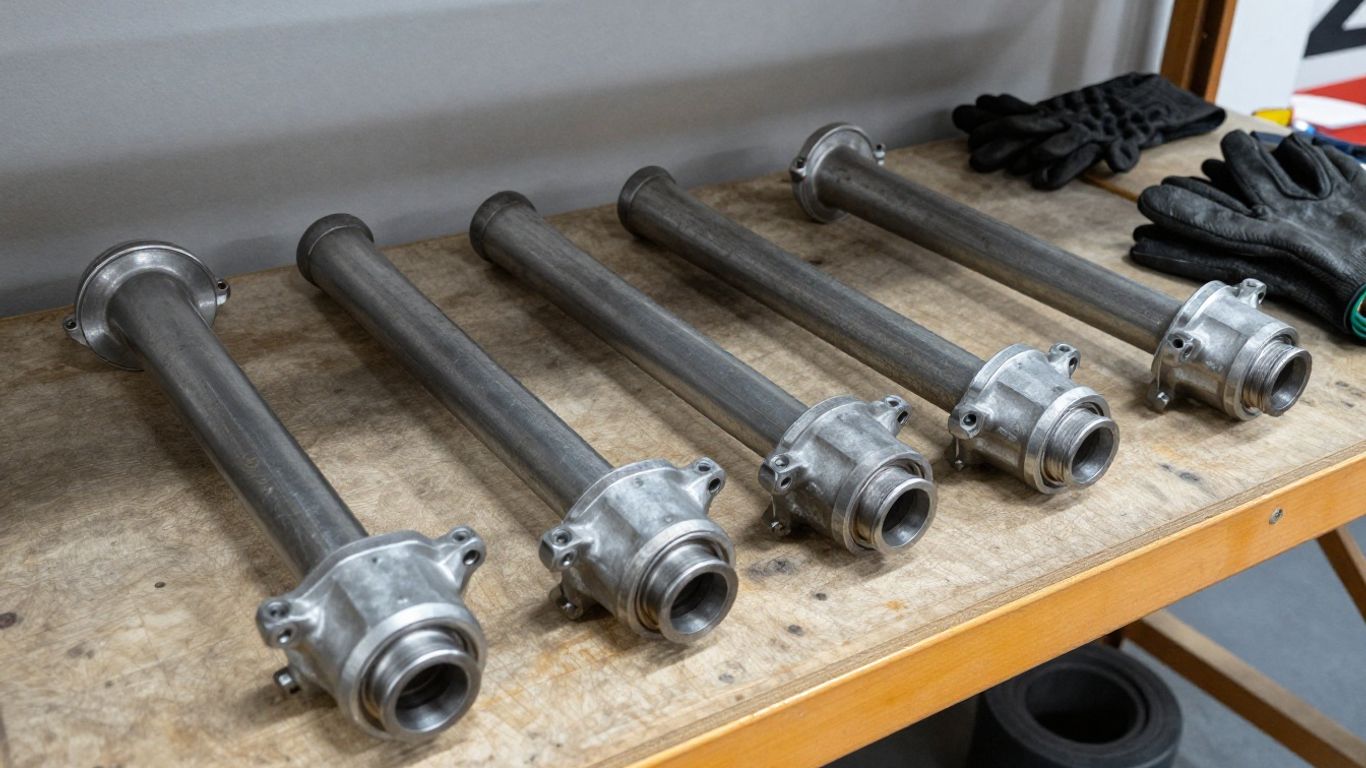
A useful listing should describe the donor vehicle, year or build period, drivetrain, transmission, position, part number, and visible condition. Generic wording such as “fits Skoda” is not enough to establish compatibility. Request clear photographs of the casing, mounting points, input and output areas, and identification markings before making a payment.
Compare local pickup with delivery options
Local pickup allows you to inspect the assembly and check its dimensions before taking it away. Delivery can be convenient when the correct unit is located elsewhere, but ask how the differential will be drained, capped, protected, and secured during transport. Confirm the freight cost, delivery timeframe, and process for reporting damage on arrival.
Check warranties, return policies, and supplier reputation
Read the warranty terms rather than assuming that every used part has the same coverage. Check the duration, exclusions, labour treatment, return window, and requirements for approval before removal or disassembly. A supplier who provides written part details and responds clearly to technical questions is easier to deal with if the unit proves unsuitable.
Inspect a used differential before buying
Inspection is worthwhile even when the assembly appears clean. Used drivetrain parts can contain wear that is not obvious from the outside, especially if oil has been drained before storage. If you cannot inspect the unit yourself, ask for detailed photographs, a test report, and a written description of any known defects.
Look for casing damage, leaks, and corrosion
Examine the housing for cracks, impact marks, distorted flanges, stripped threads, and corrosion around plugs or mounting faces. Fresh oil may hide a seep, so look for staining around seals and joints as well as residue on the underside. Surface grime is not automatically a fault, but damage near a bearing seat or mounting point deserves careful attention.
Examine gears, bearings, seals, and mounting points
If access is available, inspect the oil condition and look for metallic debris, chipped teeth, pitting, or unusual movement at the input and output shafts. Check seal areas and mounting bushes for damage. Some internal checks require specialist tools or partial disassembly, so avoid treating a visual inspection as a substitute for a qualified assessment.
Ask about mileage, donor vehicle, and storage conditions
The donor vehicle’s mileage and history can provide useful context, although they do not prove the remaining service life of the differential. Ask whether the vehicle was running when dismantled, why it was removed, and how long the unit has been stored. Dry, protected storage is preferable to prolonged exposure to rain, dirt, or temperature swings.
Verify that the unit has been tested before sale
Ask exactly what “tested” means. A supplier may have checked rotation and inspected the casing, while another may have evaluated the assembly on a vehicle or test rig. Request the test date, findings, and any limits on the test. This detail helps distinguish a documented used part from one that has merely been cleaned and photographed.
A used drivetrain part is only a good value when its identity, condition, and return path are clear.
That principle is especially useful when two similar-looking assemblies have very different histories. If the supplier cannot explain what was checked, treat the uncertainty as part of the cost rather than assuming the best outcome.
Calculate the real cost of the replacement
The advertised price is only one part of the replacement decision. Fitting a differential can involve fluids, seals, specialist labour, transport, and diagnosis of related damage. Build the full estimate before committing, because a cheaper assembly may no longer be cheaper once it needs additional work.
Compare the differential price with reconditioning costs
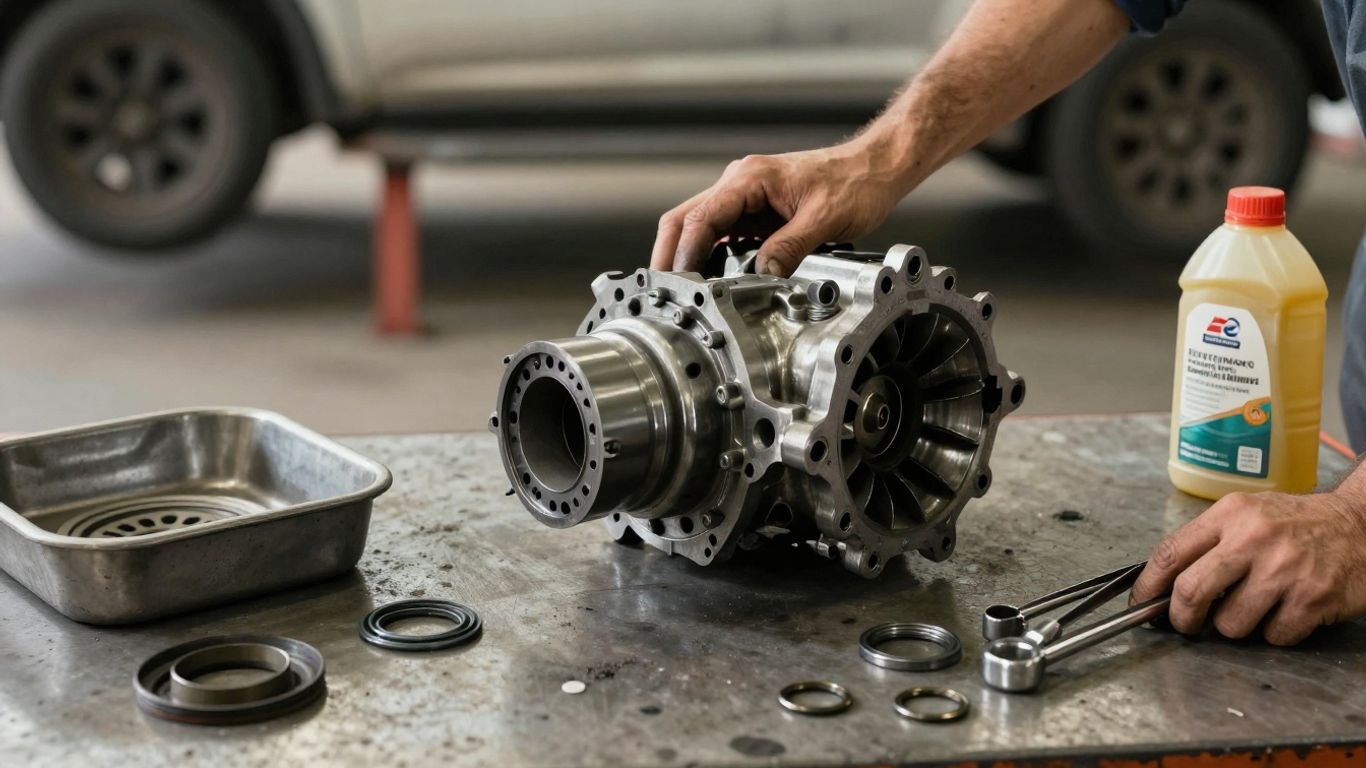
Ask for a separate estimate to inspect and recondition the existing unit. Reconditioning may involve bearings, seals, gears, machining, cleaning, and setup measurements, depending on the failure. A used replacement can be sensible when its history is credible, but a known original housing may be worth retaining if its core components remain serviceable.
Include labour, fluids, seals, and installation parts
Your estimate should include removal, installation, cleaning, the correct lubricant, replacement seals, fasteners where required, and any associated gaskets. Some jobs also reveal worn mounts, driveshaft components, or adjacent bearings once the assembly is removed. Ask the workshop to explain which items are essential now and which are observations for later attention.
Account for freight, fitting, and possible core charges
Add delivery, collection, workshop handling, and any diagnostic charge to the quoted part price. Some suppliers may require the old assembly to be returned or charge a core amount until it is received. Confirm those conditions in writing, including who pays return freight and what condition the original unit must be in.
Weigh a used unit against a remanufactured or new alternative
A used differential may reduce the initial outlay, while a remanufactured or new option may offer a different level of documentation and warranty. Compare like with like: coverage, expected turnaround, included components, labour, and the consequences of another failure. The right choice depends on the vehicle’s value, use, urgency, and the evidence available for each option.
Confirm compatibility and installation requirements
Even a correct-looking differential can be unsuitable if its ratio, mounting arrangement, or electronic configuration differs. Compatibility needs to be checked across the complete drivetrain, not just against the model name. Give the installer the supplier’s part information and ask for confirmation before the unit is opened or modified.
Match front, rear, or centre differential specifications
Confirm the differential position, housing style, final-drive ratio, flange arrangement, and mounting points. Centre differentials and transfer-case-related assemblies may have additional requirements that do not apply to a simple front or rear unit. A part number comparison, supported by the vehicle identification number, is stronger than matching by appearance.
Check compatibility with the transmission and all-wheel-drive system
The transmission and all-wheel-drive system must work with the replacement’s ratio and connection points. A mismatch can cause binding, driveline stress, abnormal tyre behaviour, or persistent noise. Have the technician compare the removed and replacement assemblies before fitting, including splines, flanges, sensors, and mounting hardware.
Verify software, calibration, and electronic control requirements
Some drivetrain arrangements include electronic monitoring or control systems that may require fault-code checks, calibration, or relearning after mechanical work. Do not assume that a mechanical swap is complete when the assembly is bolted in. Ask the workshop what diagnostic scan, reset, road test, or calibration procedure applies to the vehicle.
Have a qualified technician inspect related drivetrain components
A failed differential may be the result of worn bearings, incorrect fluid, damaged axles, tyre-size differences, or another drivetrain fault. The technician should inspect connected components and confirm the original cause where possible. Otherwise, a replacement unit could be installed into the same conditions that damaged its predecessor.
Protect your purchase after installation
The first drive is not the end of the job. Early checks can reveal installation problems, fluid loss, or a noise that was missed during diagnosis. Arrange a careful road test and keep communication open with both the workshop and supplier while any warranty or return period is still active.
Test for noise, vibration, leaks, and handling changes
Listen for whining, humming, clunking, or grinding under acceleration, deceleration, and steady cruising. Note vibration, oil spots, altered handling, or changes when turning at low speed. A brief, controlled test with the technician can help separate differential noise from tyres, wheel bearings, driveshafts, or suspension components.
Follow the correct fluid and break-in procedures
Use the lubricant specification and fill procedure recommended for the installed assembly and vehicle. Overfilling, underfilling, or using an unsuitable fluid can create avoidable wear. If the workshop advises a gentle break-in period or an early fluid check, follow that guidance and report unusual noise rather than waiting for it to worsen.
Keep invoices, part numbers, and warranty documentation
Save the invoice, supplier correspondence, donor details, part number, installation invoice, fluid information, and warranty conditions together. Record the installation date and vehicle mileage as well. This paperwork makes a future diagnosis easier and gives you the evidence needed if a return or warranty claim becomes necessary.
Know when to return the differential or seek further diagnosis
Stop using the vehicle if there is a serious leak, harsh vibration, grinding, or a rapid change in noise. Contact the installer and supplier promptly, following the warranty procedure before dismantling or authorising further work. A timely, documented response protects your position and helps establish whether the issue is the replacement unit, installation, or another drivetrain component.
Conclusion
Finding a reliable used Skoda differential in Blacktown is mainly a matter of disciplined matching and careful verification. Identify the exact assembly, inspect its history and condition, price the complete job, and have a qualified technician confirm compatibility before fitting. Those steps take a little time, but they make a sound replacement far more likely than a rushed bargain.