Key Takeaways
Finding suitable Skoda parts or removal services in Darwin is easier when you confirm compatibility, condition, and costs before committing.
- Match every part to the Skoda’s model, year, engine, and exact specification.
- Ask about testing, wear, warranties, returns, storage, and delivery.
- Inspect used components for corrosion, heat damage, and moisture exposure.
- Compare the full repair cost with dealership, online, and replacement options.
- Prepare ownership documents and towing details before selling a damaged vehicle.
What Skoda wreckers in Darwin can help you with
Skoda wreckers can be useful when a repair does not justify buying a new component, or when a damaged vehicle still contains worthwhile parts. Their stock changes as vehicles arrive and are dismantled, so availability is rarely fixed. A good starting point is to describe the problem clearly and provide the vehicle identification details. For anyone searching for Skoda wreckers Darwin, the most useful service is usually practical help with identification, sourcing, and removal.
Used parts for common Skoda models
Wreckers may have parts from familiar Skoda models such as the Octavia, Fabia, Superb, Karoq, or Kodiaq, although the exact stock depends on recent vehicles received. Ask for the part number where possible, rather than relying only on a model name. The same-looking component can vary by production year, trim level, drivetrain, or engine. Photos of your existing part can also help the seller check shape, connectors, and mounting points.
A used component can make sense for a non-safety-critical repair or an older vehicle. It is still worth asking whether the part has been inspected and whether its operating history is known. That small conversation can prevent an inexpensive purchase from becoming an expensive fitting exercise.
End-of-life vehicle recycling and dismantling
When a Skoda is no longer economical to repair, dismantling can recover usable components while separating materials for recycling. Fluids, batteries, tires, glass, metals, and other items need appropriate handling, so the process is more involved than simply stripping a car in a driveway. Ask the wrecker what happens to reusable parts and the remaining vehicle shell.
Dismantling also helps owners avoid storing an unroadworthy car indefinitely. Before arranging collection, remove personal belongings and check whether any valuable accessories or documents are still inside. A clear handover reduces delays when the vehicle reaches the yard.
Spare parts for repairs and restorations
Used parts can support anything from a straightforward mechanical repair to a longer restoration project. Body trim, seats, switches, wheels, brackets, and discontinued fittings may be especially useful when new stock is limited. For restoration work, try to source matching pieces from the same generation and interior specification so the finished vehicle looks consistent.
For larger projects, make a complete parts list before making calls. Grouping requests by mechanical, body, electrical, and interior systems gives the wrecker a clearer picture of what you need. It may also reveal that several parts can be sourced from one donor vehicle.
Vehicle removal and cash-for-car options
Some wreckers purchase damaged, unwanted, or end-of-life vehicles and arrange removal, but the terms differ between businesses. Confirm whether towing is included, whether the vehicle must be accessible, and when payment is made. A car that cannot start may still be collected, provided the owner explains its condition and location in advance.
Do not judge an offer only by the headline amount. Towing charges, missing components, registration status, and paperwork can affect the final figure. Get the main terms in writing before handing over the keys.
How to find the right Skoda wreckers in Darwin
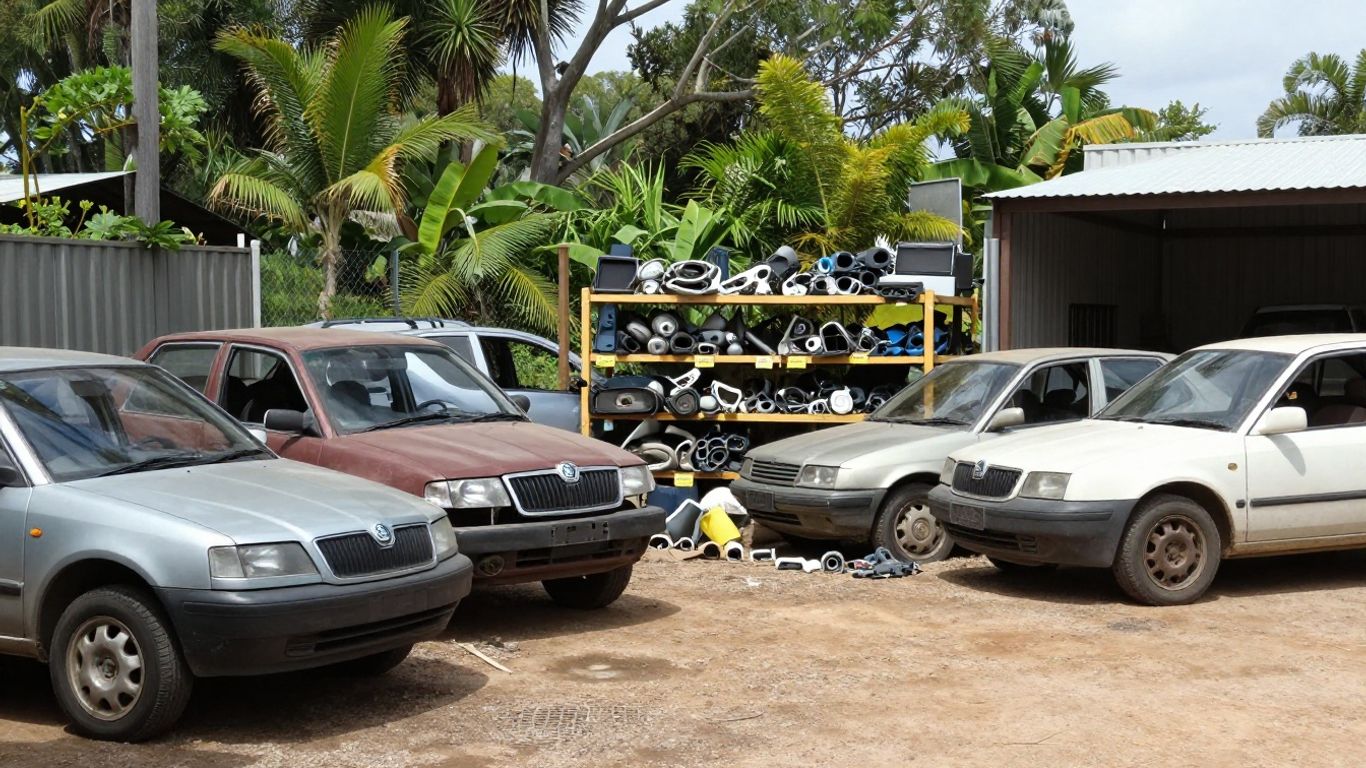
The closest yard is not necessarily the most useful one. Inventory depth, communication, part identification, and removal arrangements can matter more than distance. Start with the exact component or service you need, then contact businesses that can explain how they will check it. This approach makes comparisons fairer and saves time.
Checking local inventory and model compatibility
Give the wrecker the model, build year, engine size, transmission type, body style, and vehicle identification number if available. Include the side of the vehicle for parts such as mirrors, doors, suspension components, and lights. A part listed for an Octavia, for example, may not suit every Octavia variant.
If you are unsure of the name, describe where the component sits and send a clear photograph. Ask the seller to confirm compatibility rather than treating a visual match as proof. This is particularly important for electrical, drivetrain, and safety-related parts.
Comparing genuine, aftermarket, and used parts
A genuine part may offer the closest match to the original specification, while an aftermarket item can provide another new replacement route. A used original component may be the sensible choice when budget, appearance, or availability is the main concern. Each option should be compared on more than purchase price.
Consider fitment, expected life, warranty cover, delivery, and installation time. For a minor trim item, a used part may be straightforward. For a component that requires extensive labor to access, the cheapest item is not always the cheapest repair overall.
Confirming availability before visiting
Call or message before driving to a yard. Ask whether the part is physically in stock, whether it has already been removed, and whether it is being held for another customer. Have the original part number, photographs, and vehicle details ready during the conversation.
If the component is large or fragile, confirm how it will be packaged. You can also ask for current photographs showing connectors, mounting points, surfaces, and any visible damage. A few minutes of checking can avoid a wasted trip across Darwin.
Reviewing business credentials and customer feedback
Look for clear contact details, a physical operating location, written terms, and a straightforward process for returns or defective parts. Customer feedback can reveal how a business handles communication, delivery, and problems after the sale. Treat online reviews as one input rather than a substitute for asking direct questions.
Be cautious when a seller cannot identify the source of a part or avoids explaining its condition. A reliable transaction should leave you knowing what component you are buying, what it costs, and what happens if it does not fit or work as described.
Popular Skoda parts available from wreckers
A dismantled Skoda can provide far more than an engine or gearbox. Depending on the donor vehicle, a wrecker may recover bodywork, cabin fittings, electronics, cooling equipment, and suspension hardware. Stock varies, and some parts are removed only after a buyer asks for them. The list below shows the main groups worth discussing.
Engines, transmissions, and drivetrain components
Engines, transmissions, driveshafts, axles, differentials, turbochargers, starters, and alternators can be costly to replace new. Ask about recorded mileage, testing, compression or operating checks where relevant, and what accessories are included. Confirm whether the quoted price covers a complete assembly or only the central unit.
Compatibility goes beyond engine badges. Sensors, wiring, control modules, mounts, and transmission software can differ across variants. Before buying, have a mechanic compare the proposed component with the vehicle’s existing setup and installation requirements.
Body panels, doors, mirrors, and lights
Doors, bumpers, guards, hoods, tailgates, mirrors, grilles, windows, and light assemblies are common requests after collisions. Matching the paint code can reduce refinishing work, but a close color match may still vary because of age and sun exposure. Ask for photographs of edges, mounting points, and visible scratches.
Check whether a door includes its glass, regulator, lock, trim, and mirror, or whether these are priced separately. For lights, inspect lenses for cracks and moisture, and verify whether bulbs, ballasts, or control units are included.
Interior fittings and electrical parts
Seats, consoles, dashboards, switches, window controls, infotainment units, instrument clusters, wiring, and interior trim may be available from a suitable donor. These parts often depend on trim level and optional equipment, so a photograph alone may not establish a match. Compare connectors and mounting points before ordering.
Electrical components deserve extra care because a cosmetic inspection cannot confirm operation. Ask whether the item was tested, whether coding may be required, and whether the seller provides a return period if it fails after installation.
Suspension, braking, and cooling components
Suspension arms, hubs, springs, calipers, brake components, radiators, fans, condensers, hoses, and tanks can sometimes be sourced used. Wear-sensitive parts should be assessed conservatively, especially when labor to replace them is significant. A used housing may be worthwhile even when seals, pads, bearings, or hoses should be renewed.
Ask how the part was stored and whether it has been checked for distortion, leaks, seized movement, or impact damage. With brakes and steering, professional inspection is essential before the vehicle returns to the road.
How to choose reliable used Skoda parts
Reliability starts with accurate identification, but it does not end there. A part can be correct for the vehicle and still be unsuitable because of wear, corrosion, contamination, or previous damage. Ask questions in a consistent order and record the answers. Condition matters as much as price when fitting a component takes time.
Matching parts by model, year, and engine
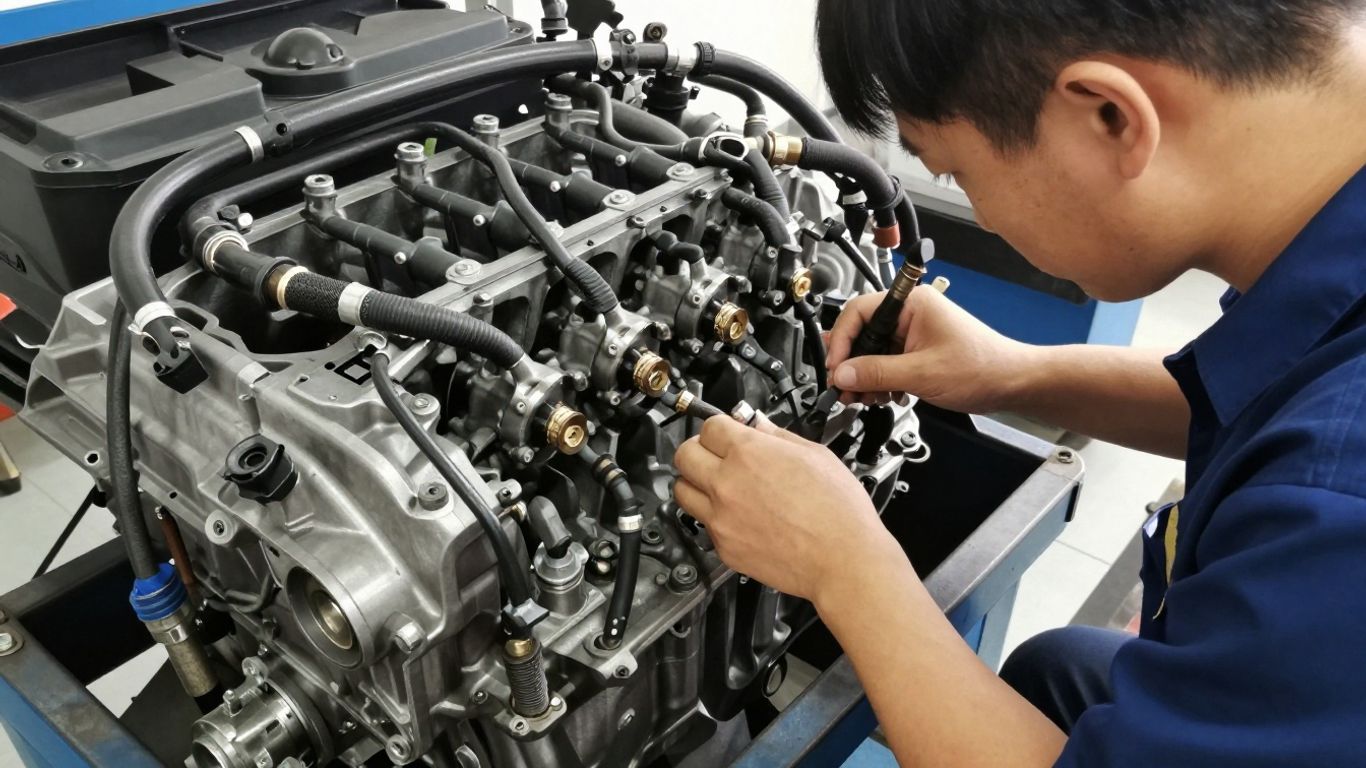
Write down the full vehicle details before contacting a seller: model, build date, engine code, transmission, drive configuration, and body style. Include the VIN when a supplier requests it. For electronic modules and engine-related parts, the original part number is often the most useful reference.
A mechanic or parts specialist can help interpret differences between revisions. Do not assume that a component from the same model name will plug in, bolt on, or communicate correctly with your vehicle.
Inspecting condition, mileage, and wear
Ask for the donor vehicle’s mileage and reason for dismantling when that information is available. Inspect housings for cracks, mounting points for impact marks, shafts for play, and connectors for broken locks or water staining. For body parts, check seams, undersides, and edges rather than looking only at the main visible surface.
If you are buying remotely, request detailed photographs and a written description of faults. A part with minor cosmetic wear may be acceptable, while hidden structural or electrical damage may not be. The right standard depends on the component’s role.
Asking about warranties and return policies
Before payment, confirm how long any warranty lasts, what it covers, and whether labor is excluded. Ask about the process for reporting a defective item and whether the part must be returned before a replacement or refund is considered. Keep the invoice, messages, photographs, and packaging until the part has been fitted and checked.
A return policy may have conditions for incorrect ordering, modification, or installation by an unqualified person. Understanding those conditions early is far easier than disputing them later.
Balancing price with expected service life
Compare the used price with the likely remaining life of the part and the labor needed to install it. A low-cost component can be reasonable when access is easy and failure would be inconvenient rather than dangerous. The calculation changes when replacement requires substantial disassembly or specialist programming.
The cheapest part is only a bargain when it suits the repair and performs for a reasonable period.
Use that principle when comparing quotes. Sometimes a better-condition used part, a refurbished component, or a new item delivers a lower total cost even if its purchase price is higher.
Buying Skoda parts safely in Darwin’s climate
Darwin’s heat, humidity, heavy rain, and seasonal weather can affect how vehicle parts age and how they should be stored. Used components may have spent time outdoors, in a damaged vehicle, or in transport. Ask practical questions about exposure rather than assuming every part has been protected. This is especially relevant for electronics, rubber, paint, and exposed metal.
Checking for corrosion and heat-related damage
Inspect brackets, fasteners, seams, terminals, plugs, and undersides for rust or white oxidation. Look for brittle plastic, faded surfaces, cracked rubber, warped trim, and discolored wiring insulation. Moisture inside lights, instrument components, or connectors can signal a larger storage or sealing problem.
Surface marks are not always serious, but corrosion around mounting points and electrical contacts deserves closer attention. If photographs are unclear, ask for additional close-ups before agreeing to the purchase.
Confirming storage and handling standards
Ask whether parts are kept under cover, raised away from standing water, and protected from direct sun. Engines and transmissions should be sealed appropriately, while electronic modules should be kept dry and handled to reduce connector or static damage. Clean, labeled storage also lowers the chance of parts being mixed up.
The seller should be able to explain how the component was removed and stored. Good handling does not guarantee a part will work, but poor handling creates avoidable risks before installation even begins.
Choosing parts suitable for local driving conditions
Consider how the vehicle is used around Darwin, including heat, wet-season water, dust, short trips, and long highway runs. Cooling parts, air-conditioning components, seals, electrical connectors, and suspension items may deserve particular scrutiny. A mechanic can identify which related parts should be renewed at the same time.
Avoid fitting a part simply because it is available if its condition does not suit the vehicle’s use. Compatibility, service history, and protection from the local environment should guide the decision.
Arranging delivery for large or fragile components
Confirm the shipping address, freight price, handling time, packaging, and delivery access before buying an engine, gearbox, door, glass panel, or bumper. Photograph the package when it arrives and report visible freight damage promptly. Ask whether the item is shipped drained, secured, and protected against movement.
For fragile parts, local pickup may allow you to inspect the item before accepting it. If delivery is necessary, make sure someone can receive and safely store the component out of heat and rain.
Selling or disposing of a damaged Skoda
A damaged Skoda may still have a useful value even when repairing it no longer makes financial sense. The decision depends on the damage, insurance position, registration, parts value, and towing cost. Obtain a repair estimate before accepting a quick offer, but do not spend heavily on assessment work for a vehicle that is clearly beyond economical repair. Clear information makes the appraisal more accurate.
When wrecking is better than repairing
Wrecking may be worth considering when structural damage is severe, key safety systems are affected, parts are difficult to source, or the repair estimate approaches the vehicle’s market value. A mechanic, insurer, or qualified assessor can help separate cosmetic damage from problems affecting the chassis, drivetrain, or restraint systems.
Also consider downtime and hidden costs. A repair that looks manageable may grow once panels, sensors, cooling components, alignment, paint, and calibration are included. Compare the likely finished cost with the value and intended use of the car.
Preparing your vehicle for an appraisal
Clean out personal items, gather service records, and photograph the vehicle before collection. Make a note of missing keys, warning lights, accident damage, non-running issues, modifications, and valuable accessories. Be honest about the condition; accurate details usually produce a more useful quote.
Have the vehicle parked where a tow truck can reach it if possible. Remove only items you are entitled to keep, and confirm whether the wrecker expects the vehicle to be complete before the appraisal.
Documents needed for sale and deregistration
Requirements can vary, so check the current Northern Territory process and ask the buyer what documentation is needed. You may need proof of identity, ownership or disposal authority, registration details, and information about the vehicle’s status. If the car is insured or financed, resolve those arrangements before transfer.
Keep copies of signed paperwork, receipts, and collection details. Confirm who is responsible for notifying the relevant authority and whether plates, registration, or cancellation steps remain with you.
Organizing towing and same-day vehicle removal
Ask whether removal is available on the day you call and whether there is an additional charge for distance, access, or after-hours collection. Explain if the Skoda is locked, missing wheels, parked underground, or unable to roll. These details affect the equipment required.
Before the vehicle leaves, remove personal belongings and photograph its condition. Confirm the agreed price, payment method, and receipt with the driver or business representative so the handover is documented.
Costs and alternatives to consider
The price of a used part is only one part of the decision. Freight, diagnostic work, seals, fluids, programming, fitting, and the possibility of a second repair can all change the final figure. Request an itemized estimate when comparing options. A short written quote is more useful than a general promise that the part is affordable.
How used Skoda parts are typically priced
Pricing commonly reflects the part’s rarity, condition, demand, mileage, completeness, and how difficult it is to remove. A bare component may cost less than an assembly with sensors, brackets, wiring, or accessories attached. Cosmetic condition also matters for visible body and interior pieces.
Ask what is included and whether the price is before or after taxes, freight, or core charges. For an engine or transmission, clarify whether testing, a warranty, and return freight are included in the offer.
Comparing wreckers with dealerships and online sellers
Dealerships may provide new parts matched through official vehicle records, while wreckers can offer used original components at different prices and with different availability. Online sellers provide convenience, but fitment, condition, shipping, and returns need careful checking. These are purchasing channels, not automatic guarantees of quality.
Compare like for like. A cheaper online listing may exclude delivery or include a less complete assembly, while a local wrecker may let you inspect the item and resolve a fitment question directly.
Estimating labor, delivery, and installation costs
Ask your mechanic for an estimate before buying parts that require substantial access or calibration. Include diagnostic time, consumables, fluids, seals, freight, programming, alignment, and disposal of the old component. For bodywork, add preparation and paint if the replacement color does not match.
The table below can help organize the quote without pretending that one price applies to every repair.
| Cost area | Question to ask | Why it matters | Common risk |
|---|---|---|---|
| Part | What exactly is included? | Confirms the assembly and accessories | Missing brackets or sensors |
| Labor | How long should fitting take? | Shows the real installation cost | Extra work after removal |
| Freight | How will it be packed and delivered? | Protects the budget and part | Oversize or damage charges |
| Follow-up | Is coding, testing, or alignment needed? | Captures finishing work | Vehicle still has a fault |
After collecting the answers, compare the total rather than the advertised part price. This is often where the most realistic decision becomes clear.
Deciding between repairing, parting out, or replacing the vehicle
Repairing may suit a vehicle with a sound body, known history, and manageable faults. Selling it for dismantling can be more practical when damage is extensive or several major systems need attention. Replacing the vehicle may cost more upfront but could reduce repeated repair risk and downtime.
Write down each option’s expected cash cost, time, safety concerns, and likely resale value. If you choose to part out the car yourself, account for storage, advertising, removal of fluids, buyer access, and responsible disposal. For many owners, a complete sale to a licensed or established wrecker is the simpler route.
Conclusion
Finding the right used Skoda part or arranging vehicle removal in Darwin comes down to careful identification, honest condition checks, and a full-cost comparison. Confirm compatibility before traveling, ask how parts were stored, and keep the paperwork for every sale or purchase. With those basics covered, wreckers can be a practical option for repairs, restorations, and responsible end-of-life vehicle disposal.